Feed Flavors &
Palatants
A ration is only as good as the portion the animal actually eats. Every gram left in the trough is formulation you paid for and performance you did not get.
We develop palatants for intensive livestock production — six species ranges, powder and liquid, built for compound feeds, mueslis, pellets, premixes, and supplements.
Download Our Catalog
Livestock Flavors CatalogOur full portfolio of flavors designed for intensive livestock production and animal breeding, with recommended applications by species.
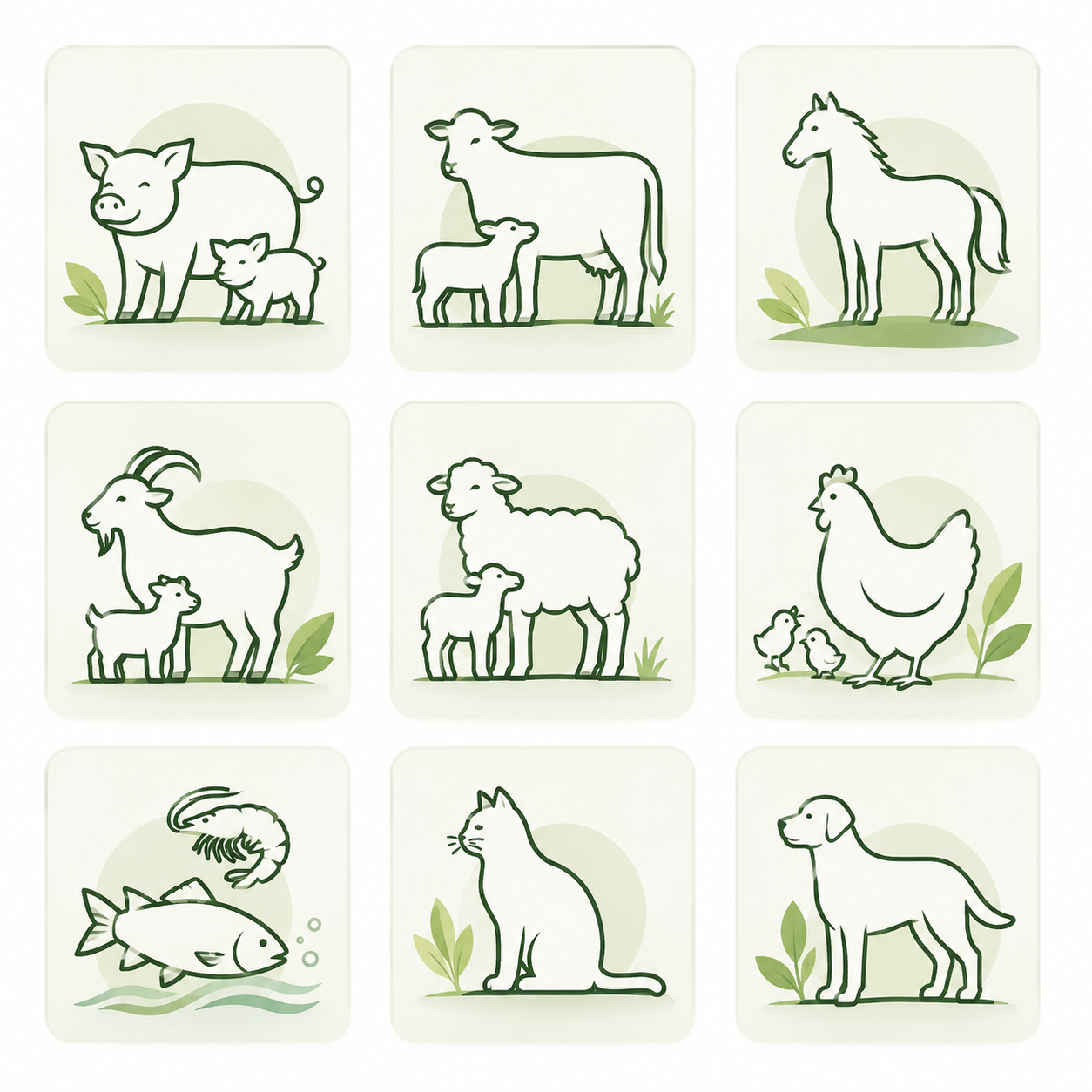
Choose Your Species
Six ranges, each built around how that animal actually detects and accepts feed.
Developing the Flavors They Like Most
Five families covering the sensory range across intensive livestock production.
Which family works depends entirely on the animal. Dairy and sweet profiles dominate at weaning across piglets, calves, lambs, and kids. Herbal and spiced notes carry adult ruminants, where concentrates are otherwise close to odourless. Marine and umami profiles drive aquaculture, replicating the prey signals fish and shrimp evolved to detect. Choosing wrongly is not a matter of a weaker result — it is often no result at all.
Intake Risk Across the Cycle
Four points where feed acceptance decides whether the ration performs — common to almost every species we supply.
Weaning & Transition
The young animal moves to an unfamiliar dry feed at the moment stress peaks. Familiar aroma carried over from the previous stage is what stops intake stalling.
Raw Material Change
Byproduct inclusion shifts with price and season. A consistent flavor layer keeps the ration smelling the same to the animal even when the formulation underneath moves.
Medication & Minerals
Coccidiostats, urea, mineral premixes, and therapeutic actives all carry notes animals detect and avoid — usually when they most need to keep eating.
Finishing & Production
In fattening, lactation, and lay, intake is the number that drives every other. Steady consumption protects feed conversion and keeps daily gain predictable.
Built for Your Process
A flavor that performs in a beaker and fails in a pellet mill is not a solution. Feed production applies heat, pressure, moisture, and shear — all of which strip volatile compounds.
So format matters as much as profile. Powder or liquid, water-soluble or fat-soluble, applied pre-mix or post-pelleting: the right answer depends on your line, not on what is easiest to supply.
We work back from your process — the dosing equipment you run, the inclusion point available to you, and the shelf life the finished feed has to hold.
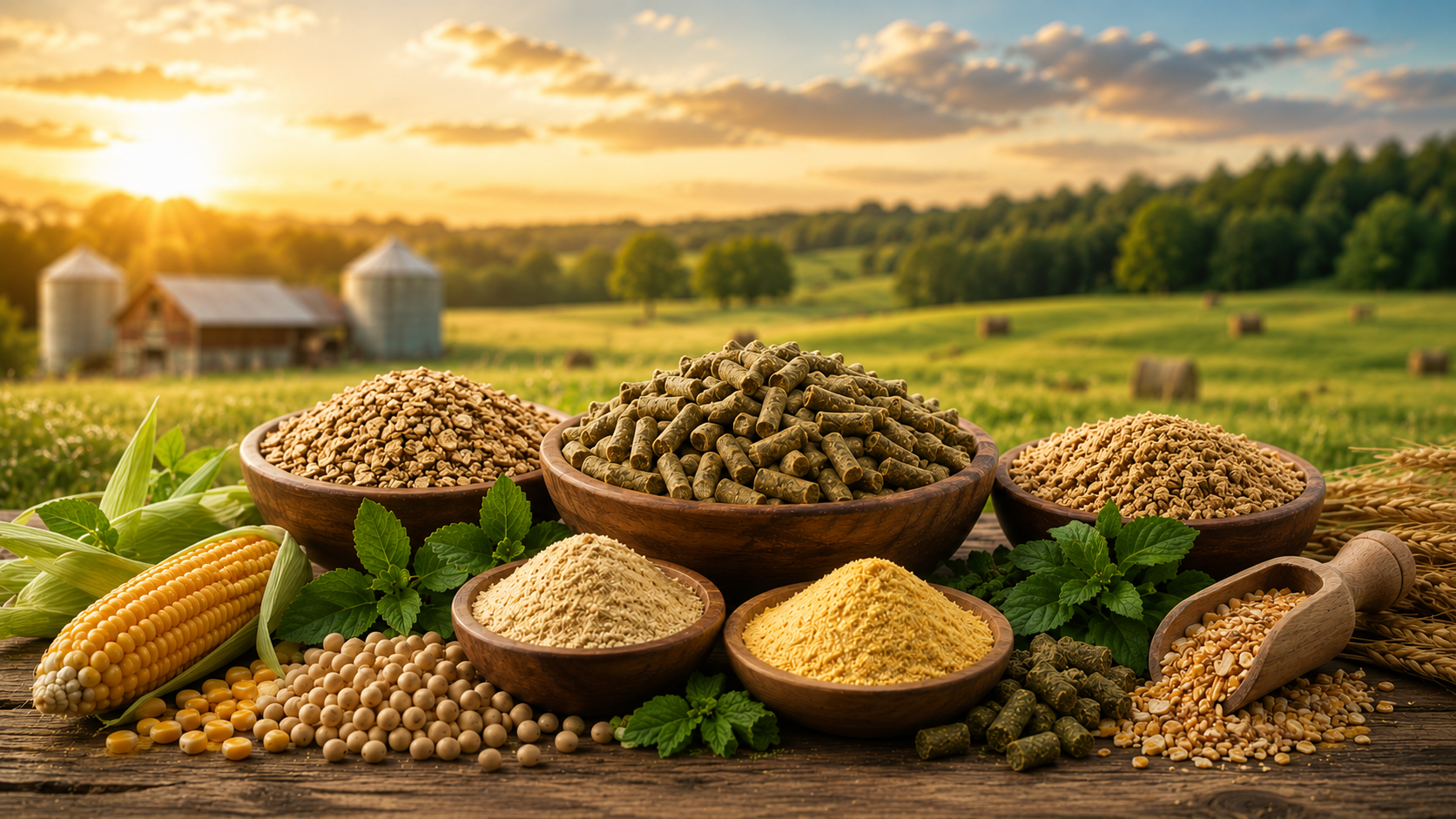
Formats & Applications
Matched to how feed is actually produced, rather than a single format you have to work around.
International Standards in Feed Safety
Our formulas are produced under certified quality and traceability systems, delivering controlled, traceable production so every batch that reaches your mill performs like the last one.
Have Questions? We Answer Them
Start by identifying why intake is low rather than adding palatant across the board. Refusal usually traces to a specific cause — an off-note from a byproduct or medication, a transition the animal has not adjusted to, or heat stress. Once the cause is clear, the flavor selection follows from it, and inclusion can stay modest.
Feed flavors are regulated as feed additives and are produced under controlled, traceable conditions with documented specifications. Ours are manufactured under certified quality systems. If you need specific regulatory documentation for your market or an audit, our team can supply it.
It depends on your line. Powders are typically added at the mixer with other micro-ingredients; liquids are dosed via spray application, often post-pelleting where heat would otherwise strip volatiles. For aquafeed and extruded diets, application point matters even more. We would look at your process before recommending a format.
Not automatically — this is exactly why format selection matters. Heat and pressure drive off volatile compounds, so a profile that works in a mash may underperform in a pellet. We select carriers and recommend an inclusion point based on your conditioning temperature and process.
It depends on the species, the format, and the base ration. We supply a recommended starting range with every sample and adjust from there based on your results. Send our specialists your formulation and we will suggest a starting point.
Flavors developed to enhance intake across intensive livestock production
Tell us your species, your ration, and what the animals are refusing. We will send samples worth testing.